
Imagine you're midway through a long five-hour drive to visit loved ones for the holidays. Your daughter asks, "Can I use your laptop for Roblox?" But this isn't just any laptop — it's your work device, holding sensitive client information, financial data, and full access to your business. You're tired from packing, still have hours ahead, and honestly, keeping her occupied sounds like a good idea. But is it really safe?
Holiday travel often exposes you to unique security risks you don't encounter in your everyday routine. Fatigue, distractions, unfamiliar WiFi networks, and mixing personal time with quick work check-ins all increase your vulnerability online. Whether you're traveling for work, leisure, or a bit of both, here's how to safeguard your data without putting a damper on your holiday spirit.
Your 15-Minute Security Checklist Before You Head Out
Spend just 15 minutes prepping your devices to stay protected on the road:
Essential device steps:
- Install all pending security updates immediately
- Back up key files securely to the cloud
- Enable automatic screen lock within two minutes of inactivity
- Turn on "Find My Device" for all phones and laptops
- Charge your portable power bank fully
- Bring your own charging cables and adapters to avoid relying on unknown sources
Setting boundaries with family:
- Clarify which devices are safe for kids to use—and which are off limits
- Provide a dedicated family tablet or secondary device for entertainment
- Set up a separate user account on your work laptop if kids need access
Pro tip: If your kids need screen time on the road, bring along a tablet that doesn't connect to your work accounts. Investing in a $150 iPad is far less costly than dealing with a data breach.
Hotel WiFi: Protect Your Data on Public Networks
Once your family checks into the hotel, everyone eagerly connects devices to the WiFi - phones, tablets, laptops, gaming consoles. Your teenager streams Netflix, your partner checks email, and you scramble to finalize a work proposal.
Here's the catch: Hotel networks are shared by hundreds of guests, many of whom could have bad intentions.
True story: A family unknowingly connected to a fraudulent WiFi network mimicking their hotel's. For two days, hackers captured everything they did online — passwords, credit card info, and emails.
How to stay secure:
Confirm the WiFi network name directly with the front desk. Never assume or guess.
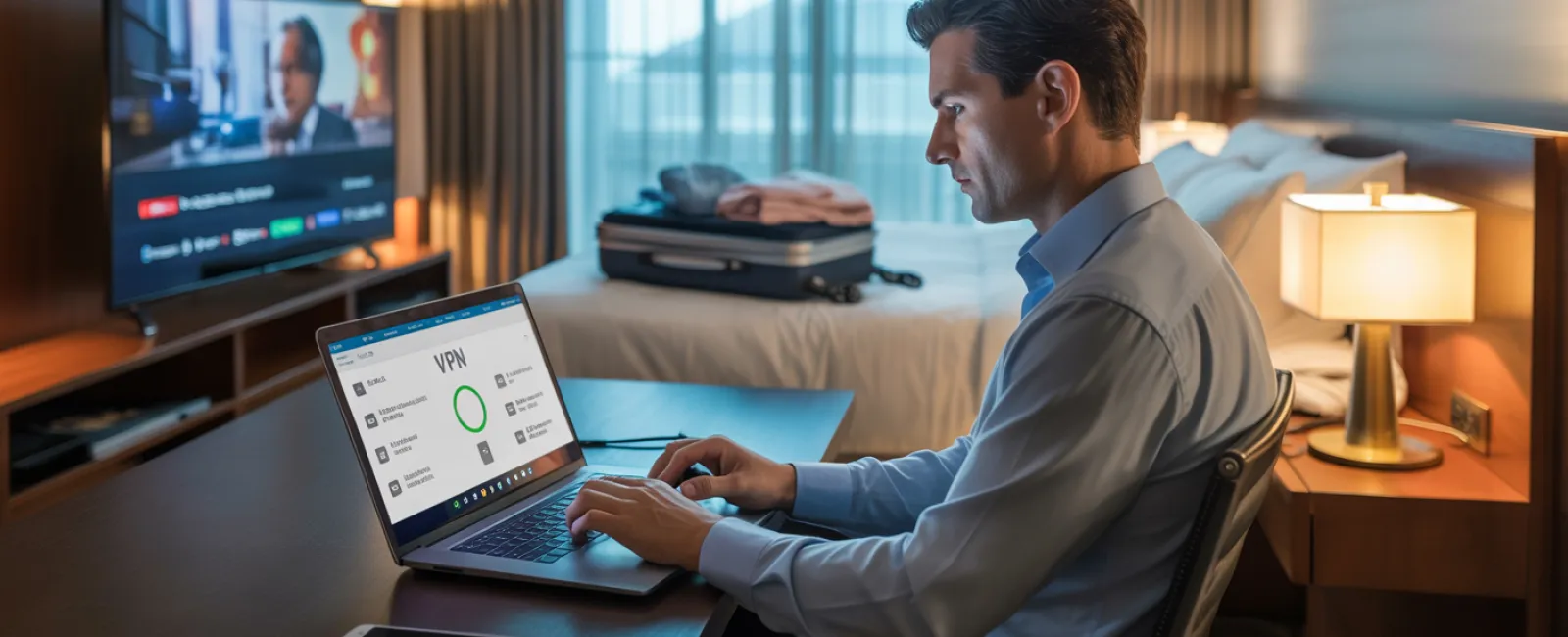
Use a VPN for work access — encrypt your connection when checking corporate email or files.
For sensitive activities like banking, use your phone's hotspot instead of public hotel WiFi.
Separate family fun from work tasks: Kids can stream cartoons on hotel WiFi while you switch to your mobile hotspot for anything confidential.
When Kids Ask: Should They Use Your Laptop?
Your work laptop contains everything — email, bank accounts, client info, business apps. Meanwhile, your kids want to watch videos, play games, or chat online.
Why this is critical: Kids can inadvertently download malware, click unsafe pop-ups, share passwords, or forget to log out. While innocent behavior, it poses serious security risks on work devices.
Simple solutions:
Firmly say no to kids using work devices — consistently redirect them to family-owned gadgets.
If sharing is unavoidable:
- Create a limited-access user account
- Supervise their activity closely
- Block downloads and installations
- Never save their passwords on your device
- Clear browsing history after they finish
Better yet: Travel with a dedicated family device — even an older tablet or laptop that's not linked to your work accounts.
Streaming On Hotel TVs? Remember to Log Out!
Your family wants to watch Netflix on the smart TV. Someone logs in, but on checkout day, forgets to log out.
What happens? The following guest gains access to your account. Even worse, if you reuse passwords (please don't), they could try to access other accounts.
How to prevent this:
- Use your own device to cast content to the TV—much safer
- If you must log into the hotel TV, set an alarm or reminder to log out before checkout
- Even better, download shows ahead of time and skip the hotel TV altogether
Avoid logging into these accounts on hotel TVs:
- Banking apps
- Work platforms
- Email
- Social media
- Any service storing payment info
Lost Device? Act Fast to Minimize Damage
Travelling means things sometimes get misplaced—restaurants, hotel rooms, rental cars, airports. If your device goes missing:
Within the first hour, do this:
- Use "Find My Device" to track it immediately
- If recovery isn't instant, remotely lock the device
- Change passwords on critical accounts from a secure device
- Notify your IT team or MSP to block access to company systems
- Alert clients if sensitive business data was on the device
Before traveling, ensure your device has:
- Remote tracking enabled
- Strong password protection
- Automatic disk encryption
- Remote wipe capability
Family member lost their device? Apply the same steps: lock it, reset passwords, and attempt to locate it.
Rental Car Bluetooth: Don't Let Your Data Linger
When you pair your phone with a rental car's Bluetooth, it stores contacts, call logs, and sometimes even text previews.
Failing to clear this data before returning means the next driver can access your personal info.
Quick 30-second cleanup before returning the car:
- Delete your device from the car's Bluetooth settings
- Clear recent GPS destinations
- Or avoid pairing altogether—use an aux cable instead
Balancing Work & Vacation: Set Boundaries to Stay Secure
You promised family time, but you've already checked emails nearly 50 times, taken three "quick" calls, and spent an hour working while others played mini-golf.
This back-and-forth drains your focus, making you more likely to overlook security. Rushing leads to clicking unsafe links or joining sketchy networks.
Real advice: If unplugging fully isn't possible, create clear work boundaries:
- Check work email only twice daily at set times
- Use your phone's hotspot—not public WiFi—for work
- Work in private hotel rooms, not public areas with visible screens
- Be fully present with family during downtime
Ultimately, the best security step is to take genuine time off. Your business won't fall apart in a week, and you'll return more alert and secure.
Adopt a Smart Holiday Travel Security Mindset
Work and family boundaries blur during holiday travel. Sometimes your kid truly needs the laptop. Sometimes you must answer an urgent email while en route.
The aim isn't perfection—it's managing risks thoughtfully:
- Prepare devices thoroughly before departure
- Recognize high-risk activities (like banking on hotel WiFi) versus low-risk (checking email via hotspot)
- Keep work and family activities separate when possible
- Have a plan ready if anything goes wrong
- Know when to say, "Not on this device," and stand firm
Secure Your Holidays and Protect What Matters
The goal of the holidays is to cherish moments with your loved ones — not to scramble through a data breach or explain client data loss.
A bit of preparation and simple rules keep your business safe without spoiling the fun. Everyone enjoys their holiday: your family, your business, and you.
Need help crafting travel security protocols for your team—and yourself? Click here or call us at (918) 770-9150 to schedule a free 15-Minute Discovery Call. We'll design practical policies that secure your business without making travel a hassle.
Because the best holiday stories shouldn't start with "Remember when Dad's laptop got hacked?"


